
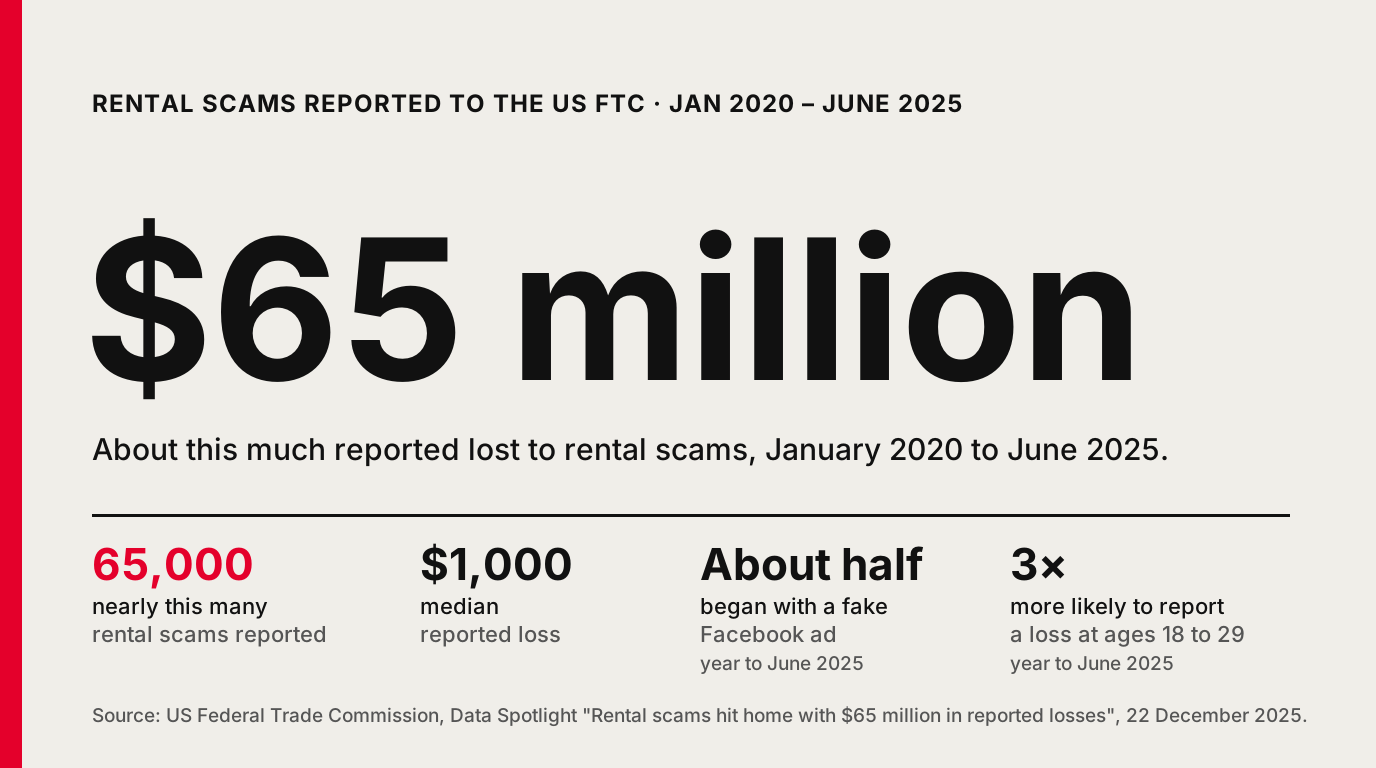
From January 2020 to June 2025, people reported nearly 65,000 rental scams to the US Federal Trade Commission (FTC), with about $65 million lost. The FTC published the figures in a Data Spotlight on 22 December 2025. Most scams are never reported to a government agency, it says, so this is likely only a fraction of the real harm. The median reported loss was $1,000.
In the 12 months to June 2025, about half of the people who reported a rental scam said it started with a fake ad on Facebook. Another 16% said it started with a fake listing on Craigslist. People aged 18 to 29 were three times more likely than other adults to report losing money to a rental scam.
The FTC lists the usual tricks. The "landlord" asks for an application fee, a security deposit or the first month's rent to "hold" the home. They send links to sites that sign you up for a credit check, often for $1. They ask for your Social Security number, a picture of your driver's license or your pay stubs. Some set up a "self-guided tour" and send a code for a lockbox holding the keys.
- Do not pay a fee, a deposit or rent to hold a home you have not seen with the landlord or agent.
- Search the address online. The FTC says the same home listed with a different price or contact details is likely a scam.
- Keep your Social Security number, ID and pay stubs until you have agreed to rent. Already sent them? See today's After you paid.
- Lost money to a rental scam in the US? Report it at ReportFraud.ftc.gov.
Source: US Federal Trade Commission, Data Spotlight "Rental scams hit home with $65 million in reported losses", 22 December 2025
Read the original: ftc.gov