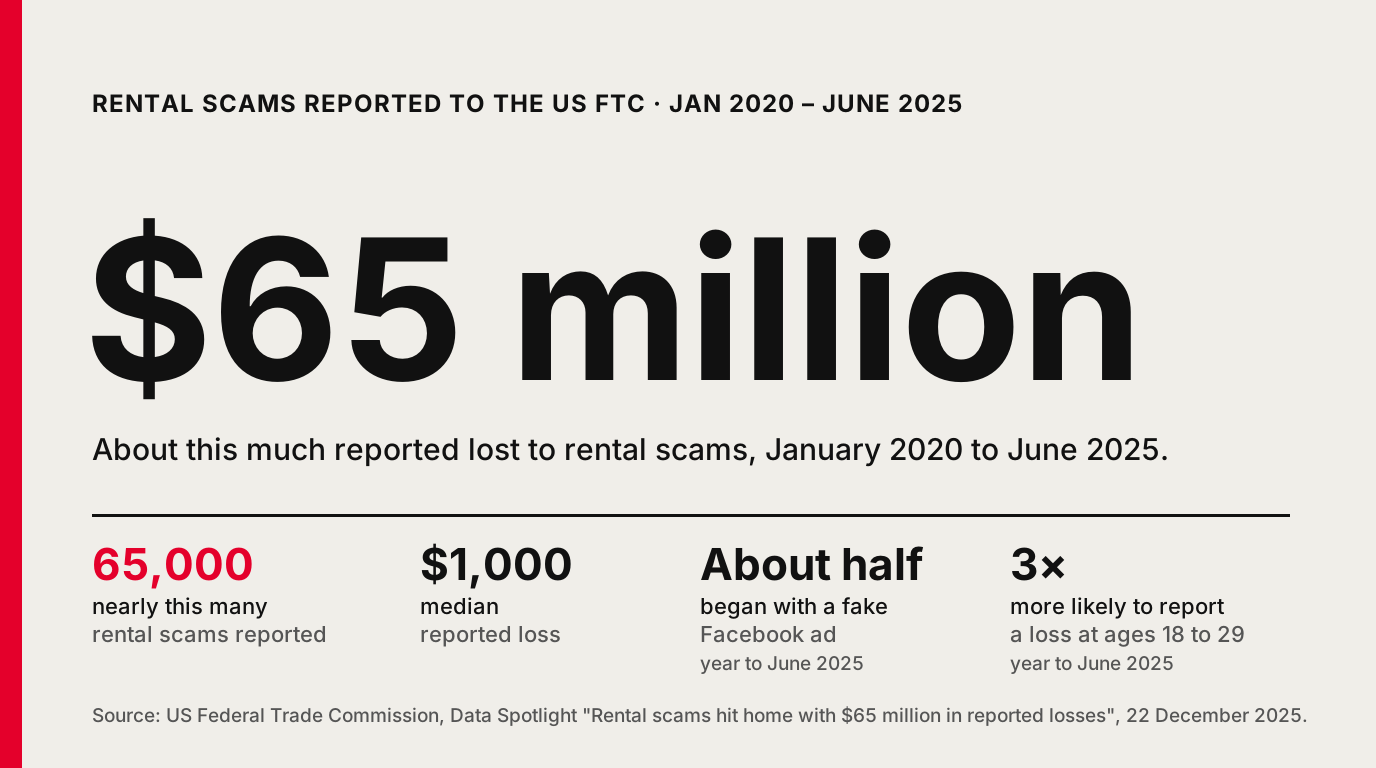


Fake landlords ask for your Social Security number, a picture of your driver's license and pay stubs, the FTC says in its rental scam figures (today's Number of the day). If you have already sent yours, someone can try to open credit in your name. The US Federal Trade Commission's page on credit freezes and fraud alerts, dated August 2025, explains two free ways to make that harder.
A credit freeze. While it is in place, "nobody can open a new credit account in your name, including you." There is no cost to place or lift it, and it does not affect your credit score. It lasts until you lift it. You contact all three credit bureaus: Equifax, Experian and TransUnion. If you need to apply for credit, you can lift the freeze for a while and put it back when you are done. Anyone can freeze their credit, even if their identity has not been stolen.
A fraud alert. It makes lenders check your identity before they grant new credit in your name. An initial alert is free, lasts one year and can be renewed. You contact one bureau, and it must tell the other two. People whose identity has been stolen can get an extended alert that lasts seven years. For that you need an FTC identity theft report from IdentityTheft.gov or a police report.
- Freeze your credit with Equifax, Experian and TransUnion. It is free, and you can lift it when you need a loan.
- If you think someone is already using your identity, report it at IdentityTheft.gov. That report also lets you ask for the seven-year alert.
- Sent bank or card details too? Call your bank on the number printed on your card and ask it to block the card.
- Keep the scammer's messages, the fake listing or ad, and the date you sent your details. You will need them for the report.
Source: US Federal Trade Commission, "What To Know About Credit Freezes and Fraud Alerts", consumer advice, August 2025
Read the original: consumer.ftc.gov