
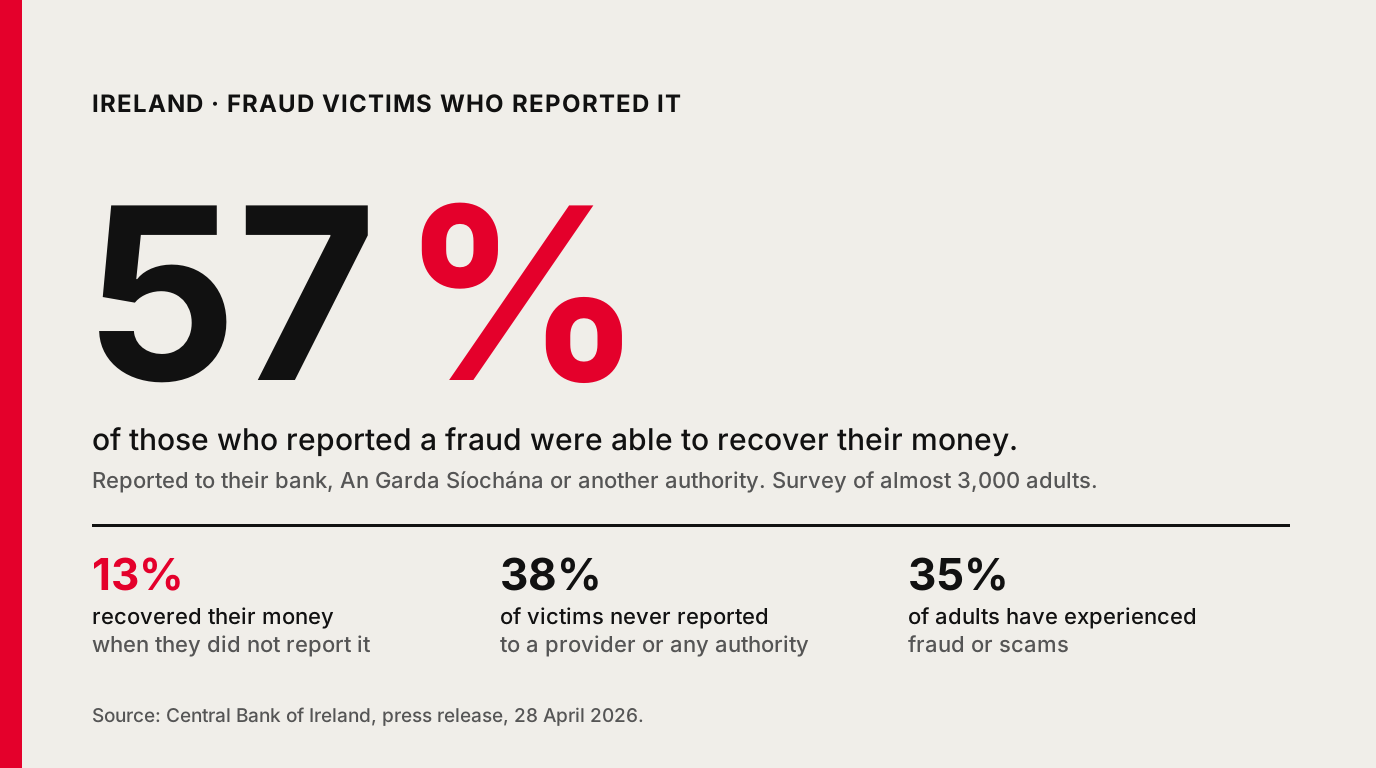
Of people in Ireland who were defrauded and reported it to their bank, An Garda Síochána or another authority, 57% were able to recover their money. Among those who did not report it, 13% did. The figures come from research the Central Bank of Ireland published on 28 April 2026, based on a nationally representative survey of almost 3,000 adults.
More than one in three adults (35%) said they had experienced fraud or scams, and nearly two-thirds of those victims lost money. Yet 38% of victims never told their financial service provider or any authority. Online purchase scams had hit 48% of victims and debit or credit card fraud 34%. Most losses were modest: 39% of victims lost less than €249. Investment fraud affected 7% of respondents, but its victims typically lost larger sums.
Where you did not authorise a payment yourself, you have a statutory right to a refund, subject to limited exceptions, the Central Bank's Deputy Governor said with the report.
- Tell your bank or payment provider as soon as you notice a fraud, even if the amount is small.
- If you did not authorise a payment, ask your bank for a refund and mention your statutory right to one.
- Report it to the Gardaí as well. Reporting also tells your bank about the fraud, which can help others.
- The research found risky online habits were the strongest predictor of fraud, more than age, income or education. They include buying from unfamiliar websites and sending money to people you met online but never in person.
Source: Central Bank of Ireland, press release, 28 April 2026
Read the original: centralbank.ie