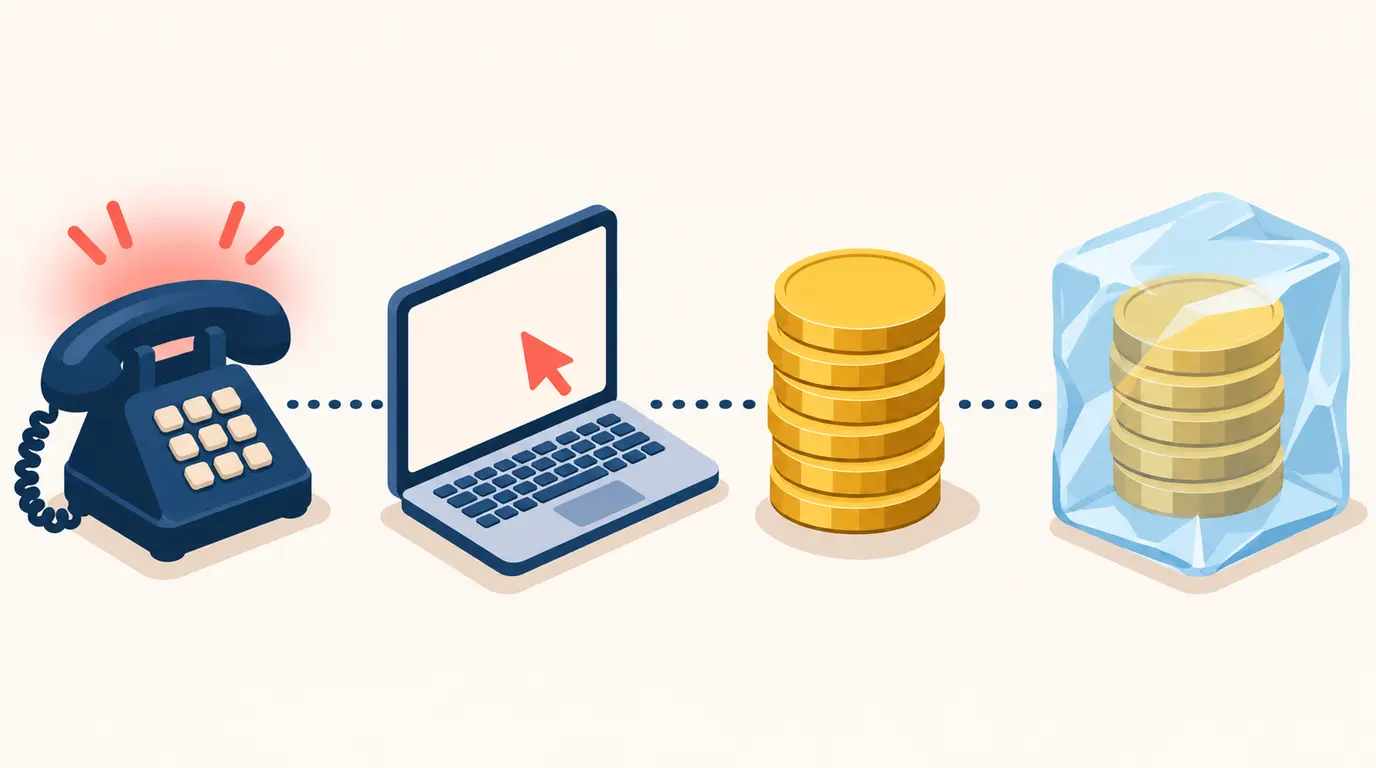


Since 30 November 2025, New Zealand's retail banks have made five scam protection commitments in their Code of Banking Practice, and they compensate eligible customers when those commitments are not met. The New Zealand Banking Association announced the change on 28 November 2025. It covers authorised payment scams, where someone tricks you into making a payment.
The commitments are warnings before certain payments, a Confirmation of Payee name check, spotting and responding to high-risk transactions, a 24/7 way to report scams, and sharing scammer account information between banks so money can be frozen. If your bank, or the member bank that received your payment, did not meet the commitments that applied, it will compensate all or some of your loss.
Under the code you are eligible if you were a consumer, made a domestic payment to a New Zealand bank account on or after 30 November 2025, did not use a third-party payment service, were not buying on social media or a similar online marketplace, and reported the scam to the New Zealand Police and your bank within 3 months of finding out and 12 months of the last payment. How much you get back depends on whether you took reasonable care. A bank compensates for these scams up to three times while you bank with it, up to a combined $500,000, and pays within 30 business days once it has the information it needs.
- Contact your bank immediately, using its 24/7 scam reporting channel.
- Report it to the New Zealand Police too. The code makes a police report, within 3 months, a condition for compensation.
- The code says you only need to deal with your own bank about compensation.
- If you are unhappy with the decision, the Banking Ombudsman is free: call 0800 805 950 or email help@bankomb.org.nz.
Source: New Zealand Banking Association, media release, 28 November 2025, and Code of Banking Practice (November 2025 edition); checked 14 November 2026
Read the original: nzba.org.nz, nzba.org.nz