
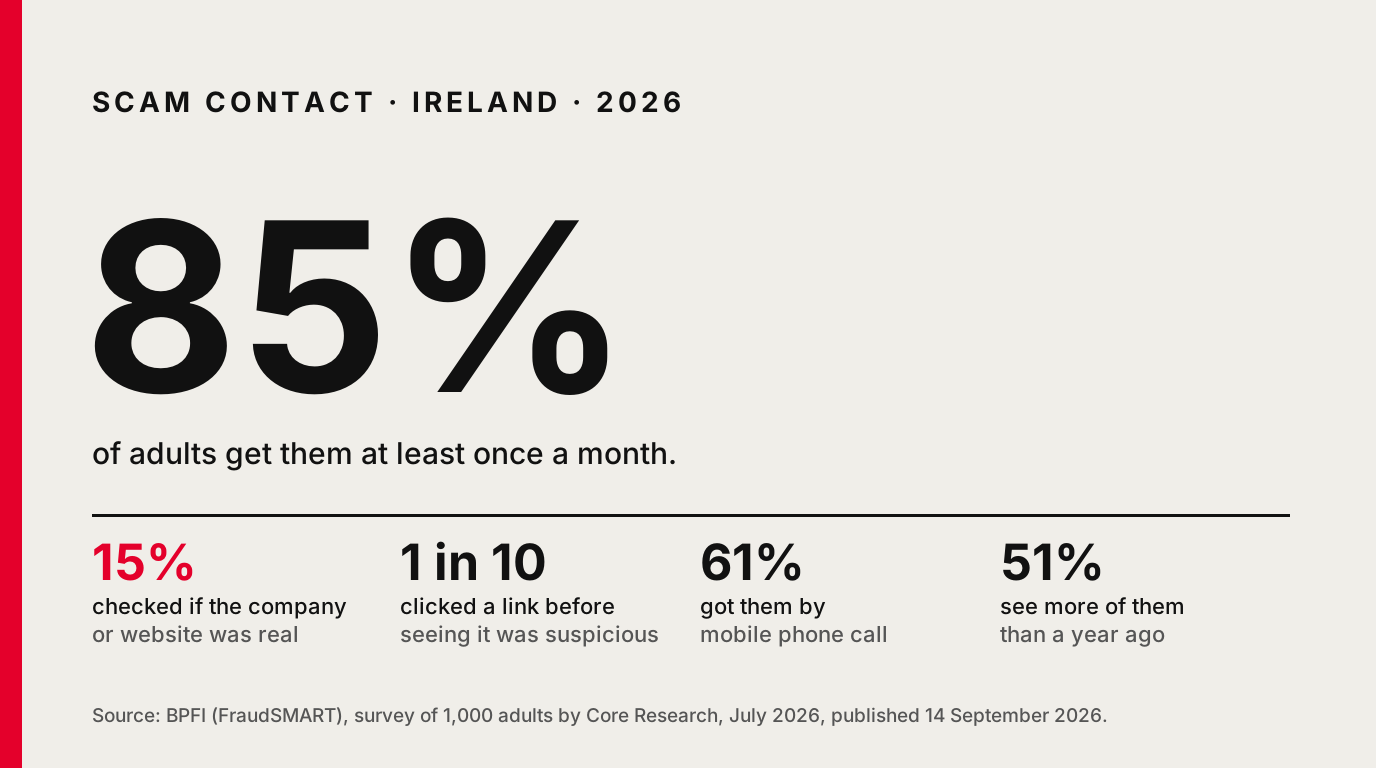
85% of adults in Ireland say they get suspicious phone calls, text messages, emails or online content at least once a month. More than half (51%) say they see more of it than a year ago. The figures come from a survey for FraudSMART, the fraud awareness initiative led by Banking & Payments Federation Ireland (BPFI), the banking industry body. Core Research asked a nationally representative online sample of 1,000 people in July 2026. BPFI published the results on 14 September 2026.
Most of the suspicious contact came by mobile phone call (61%), text message (58%) and email (51%). One in four people said a call, text or email seemed computer-generated or artificial. One in ten had clicked a link in a text or email before realising it was suspicious.
Many people did something about it: 62% of those who got suspicious calls blocked the number, and 65% of those who got suspicious texts deleted them. But only 15% of those who received suspicious texts or emails checked whether the company or website it mentioned was legitimate.
"It's important to go directly to the official company website or app, use a trusted contact number," said Niamh Davenport, Head of Financial Crime at BPFI.
- A message that looks professional proves nothing. Check the company yourself on its official website or app, never through the link or number in the message.
- In Ireland you can check a doubtful link or website at Scamchecker.ie, which BPFI recommends.
- Your bank will never ask for banking security codes, your full PIN or your passwords.
- If you clicked a link or entered details, call your bank straight away on a number you trust.
Source: Banking & Payments Federation Ireland (FraudSMART), 14 September 2026
Read the original: fraudsmart.ie