
On 29 October 2026 the US Securities and Exchange Commission (SEC) sued BG Wealth Sharing Ltd and DSJ Exchange Pty Ltd, two Colorado companies it believes were run by people abroad. It says that from March to early June 2026 alone they took in over $130 million from more than 223,000 crypto wallet addresses. These are allegations. The court has not ruled.
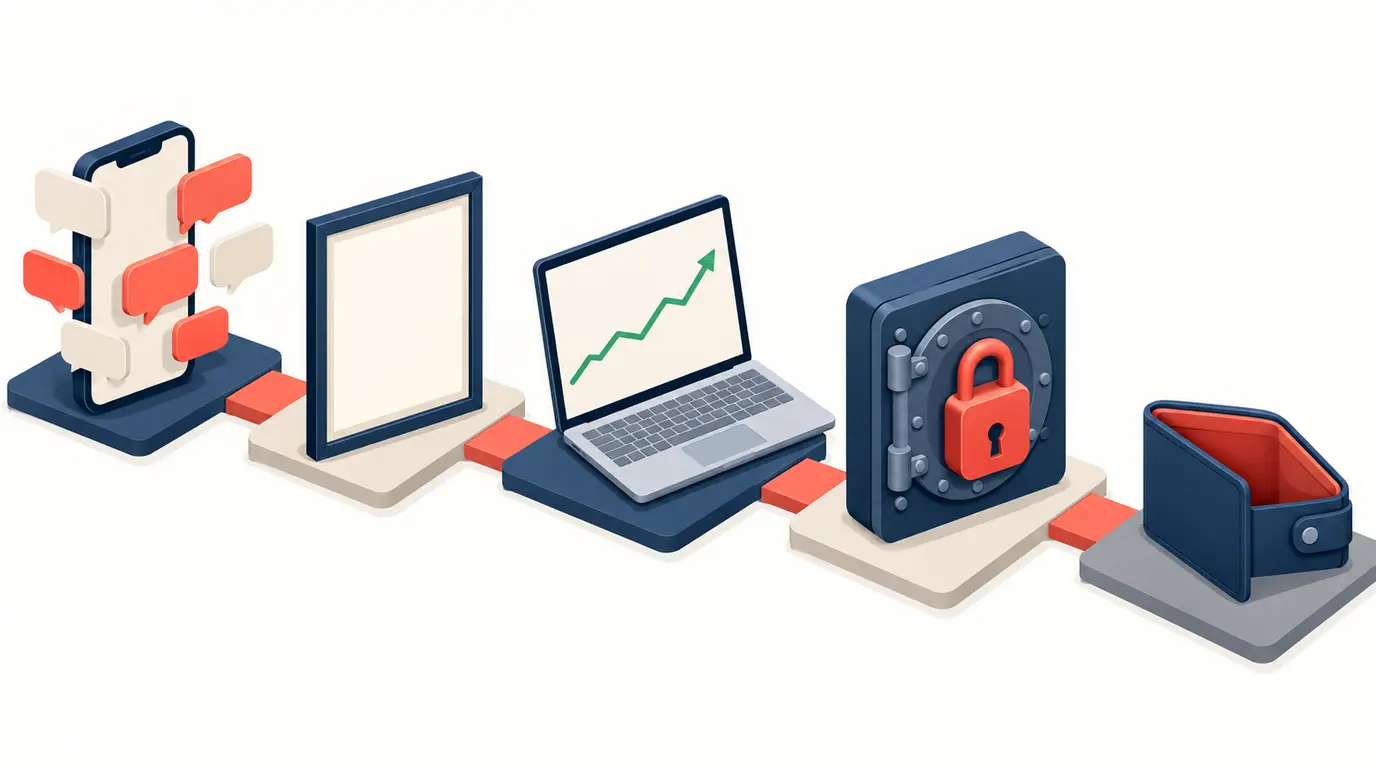
- Promoters pushed a "wealth-sharing program" on social media, weekly Zoom calls and events in US cities. It promised at least 60% a month, money doubled in 40 days, and "zero risk".
- BG Wealth claimed to be the world's largest hedge fund, licensed by the SEC. As proof, investors were sent to forms the companies had filed with the SEC themselves and shown certificates bearing the SEC's seal. A filing is not a licence, and the SEC issues no registration certificates.
- Investors deposited crypto on DSJ Exchange and twice a day copied in "trading signals" from a "Professor" Stephen Beard, a name the SEC believes is assumed. Balances on screen roughly doubled in 40 days. No trading took place.
- Investors were urged to recruit at least five more people to earn bonuses. Some withdrawals were paid, with fees of up to 20%, which built trust.
- Then withdrawals were blocked. Investors were told to pay a "tax" to unlock their accounts and to deposit more to move to a new platform, HQIEX. Those who paid still got nothing back.
The SEC puts losses at more than $100 million.
Where you can still stop it
- Step 1: 60% a month with "zero risk" is reason enough to walk away.
- Step 2: a form on the SEC website is not approval. Check the person and the firm at Investor.gov, as the SEC advises.
- Step 5: a "tax" or fee to release your own money means you will not get it back. Do not pay it.
- Already in? Save wallet addresses, transaction IDs and screenshots, and report it at ic3.gov.
Source: US Securities and Exchange Commission, press release 2026-110 and complaint, 29 October 2026
Read the original: sec.gov, sec.gov