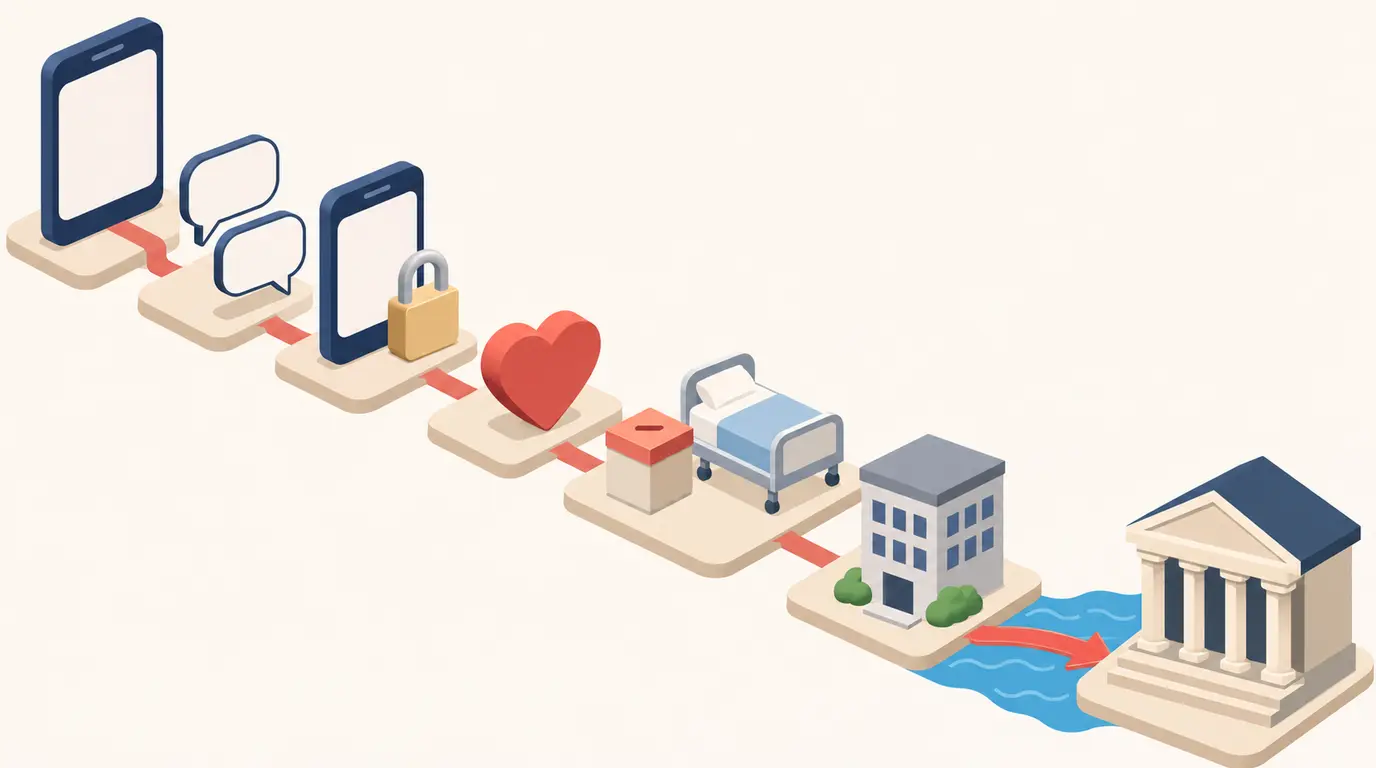


On Monday 2 November 2026 the US Federal Trade Commission (FTC) warned that scammers are posing as well-known businesses and government agencies in paid online ads. The ads show up in social media feeds, in search results and on shopping platforms, and are made to look like the real thing so that people click.
The platforms give advertisers tools to build ads and aim them at people by age, browsing history and shopping habits, the FTC says. Real companies pay for those placements, and now scammers do too, and people are losing a lot of money. The alert gives no figures.
The FTC's Impersonation Rule already bans posing as a government agency or a business. The agency is now considering changing that rule, or writing a new one, to make social media, search engines and other online marketplaces more accountable for these scams. It asks whether platforms should check advertisers and ads before they run, give people a way to report suspected impersonation ads, and investigate and take down ads that turn out to be scams. Anyone can comment online or in writing until 30 November 2026.
- An ad carries a familiar company or agency name, but the link opens a web address that is not the organisation's own. Close it and type the address you know.
- A phone number in an ad or a sponsored search result is not proof it belongs to the company. Take the number from your bill, your card or the official website.
- An ad offers a service or a refund in the name of a government agency. Go to the agency's own website first; for US federal agencies it usually ends in .gov.
- Lost money after clicking an ad? Report it at ReportFraud.ftc.gov, and report the ad to the platform that showed it.
Source: US Federal Trade Commission, consumer alert "Tell the FTC about imposter ads online", 2 November 2026
Read the original: consumer.ftc.gov