
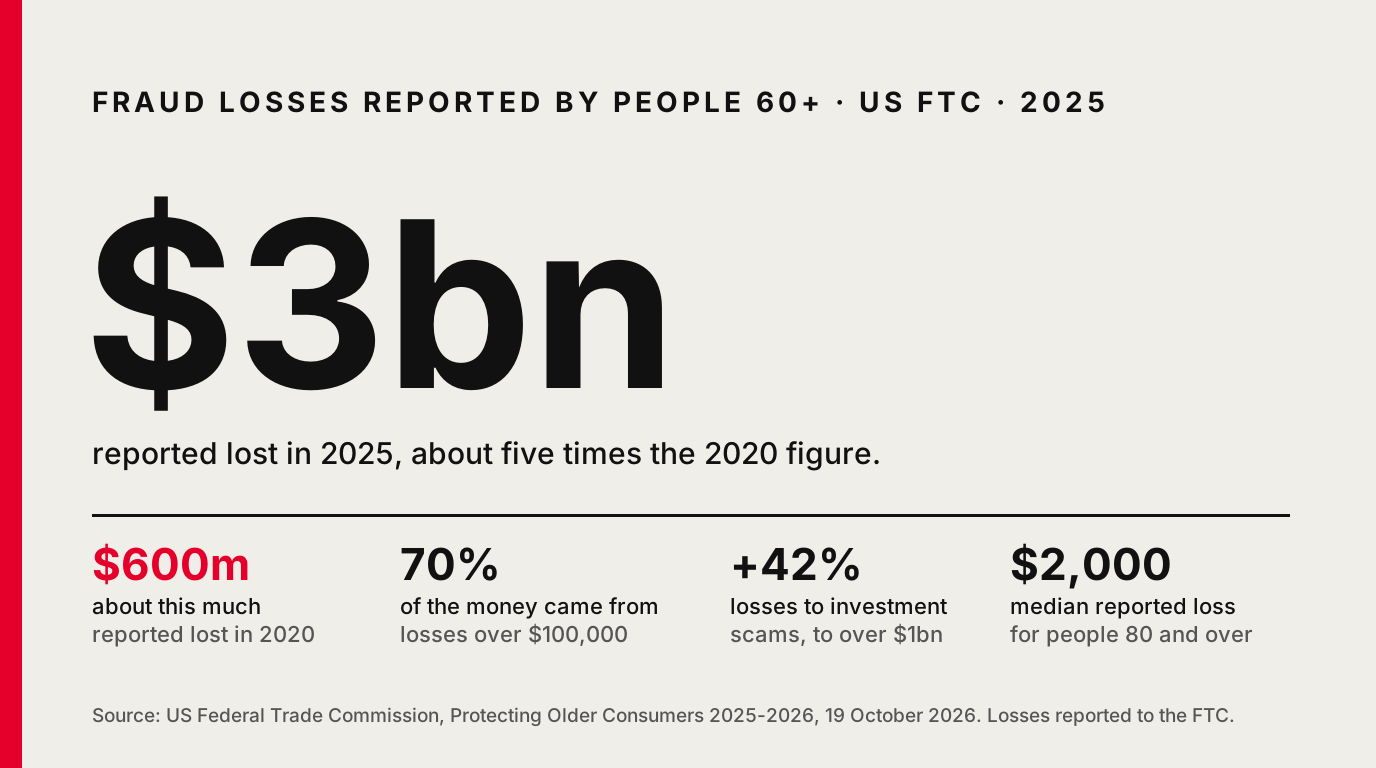
The US Federal Trade Commission (FTC) said on 19 October 2026 that people aged 60 and over reported losing about $3 billion to fraud in 2025. In 2020 the figure was about $600 million, so it is about five times higher. The numbers come from reports to the FTC's Consumer Sentinel Network and are in its annual report to Congress, "Protecting Older Consumers 2025-2026".
Most of the rise came from very large losses. Only 6% of older adults' loss reports in 2025 were for more than $100,000, but those reports made up 70% of the money. Many were about investment scams, romance scams, and scammers posing as the FTC, banks, Publishers Clearing House and Microsoft. Reported losses to investment scams rose 42% in 2025, to over $1 billion.
People 80 and over had a median reported loss of $2,000, far higher than any other age group. Bank transfers and cryptocurrency were the payment methods with the highest reported losses.
The FTC says most fraud is never reported. Allowing for that, it estimates the overall cost of fraud to older adults in 2025 at between $13.3 billion and $119.5 billion, depending on the method, and says the range is very uncertain.
- If you have already sent money to an investment, a new partner or a caller and are asked for more, stop and talk to someone you trust first.
- Hang up on anyone who says they are from the FTC, your bank or Microsoft and asks you to move money, then call the real number yourself. The FTC says it will never demand money, make threats, tell you to transfer money or promise you a prize.
- Being asked to pay by bank transfer or in cryptocurrency is a reason to slow down. These were the costliest ways older adults paid scammers in 2025.
- In the US, report fraud at ReportFraud.ftc.gov, even if you did not lose money.
Source: Federal Trade Commission, "Protecting Older Consumers 2025-2026: A Report of the Federal Trade Commission" and press release, 19 October 2026
Read the original: ftc.gov, ftc.gov