
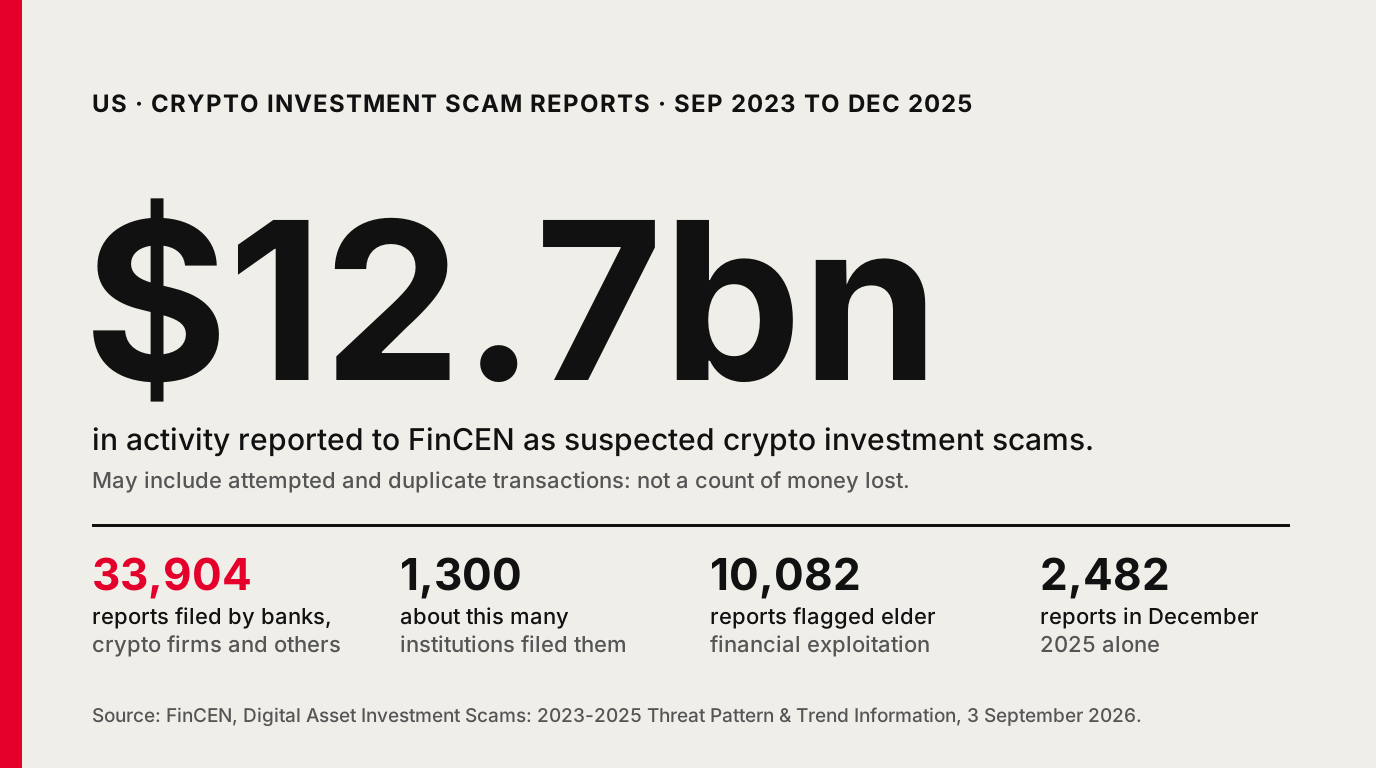
Banks, crypto firms and other US financial institutions filed 33,904 reports about suspected crypto investment scams between 8 September 2023 and 31 December 2025. Those reports covered about $12.7 billion in financial activity. The figures come from an analysis by the Financial Crimes Enforcement Network (FinCEN), the US financial intelligence unit, published on 3 September 2026.
The $12.7 billion is not a count of money lost. FinCEN says the amounts can include attempted transactions, transfers between accounts, duplicates and errors. About 1,300 institutions filed the reports. FinCEN received 590 of them in October 2023 and 2,482 in December 2025, and says the rise may partly reflect more firms using its reporting key term, not only more scams.
Elder financial exploitation was flagged in 10,082 reports, nearly 25 percent. People aged 60 and over make up about 24.4 percent of the US population, so FinCEN found no sign that they were targeted more than others.
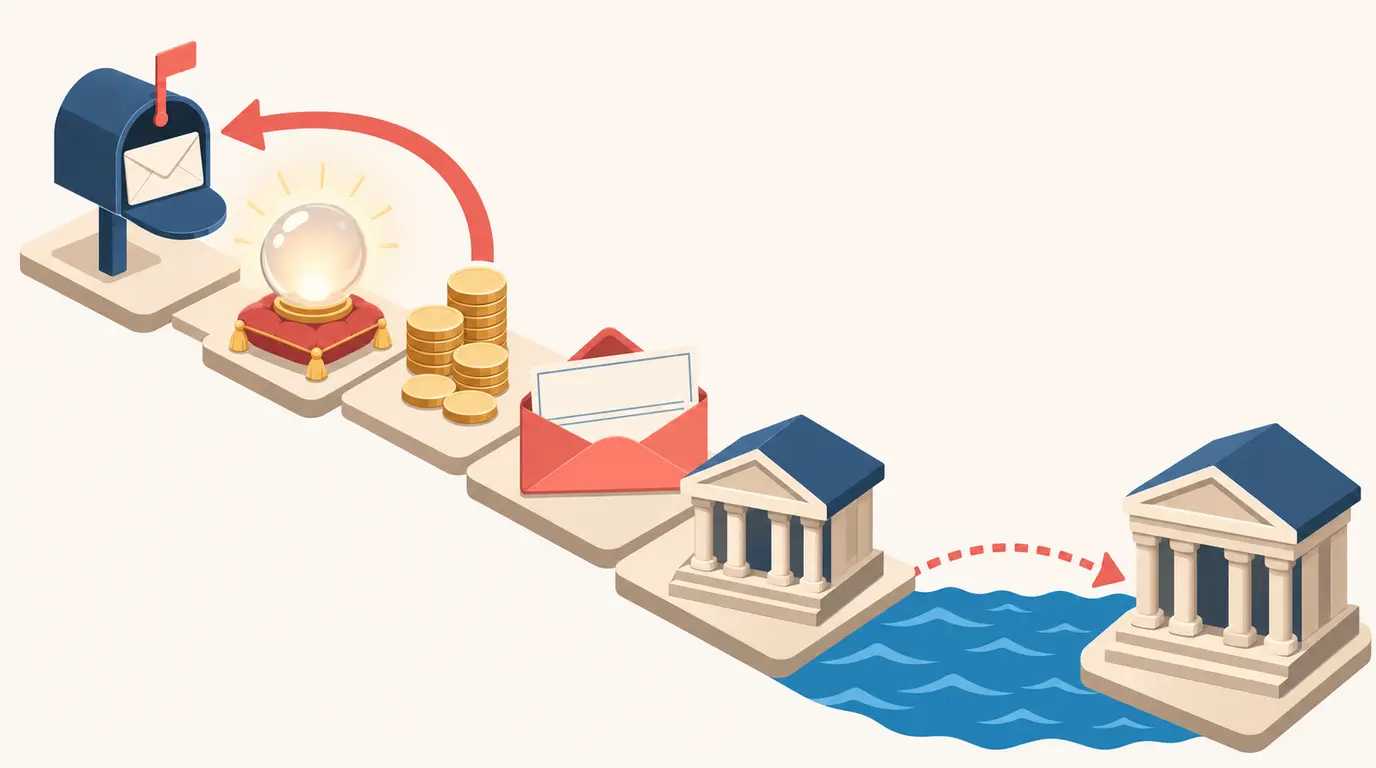
The reports describe a familiar path: a "wrong number" text or a message on social media or a dating site, a friendship or romance, then an investment app or website that shows growing profits. Some victims took money from retirement accounts, home equity lines of credit or second mortgages. A demand for "fees" or "taxes" before a withdrawal often marked the last stage.
- A stranger who moves from a wrong-number text to talk of crypto investing is following a known script. Stop replying.
- Profits on an app screen are not money in your account. Small early payouts are used to get you to send more.
- Asked to pay a fee or tax before you can withdraw? Do not pay. Report it to the FBI at ic3.gov.
- Being pushed to borrow against your home or empty a retirement account for an investment is a reason to call your bank before you move anything.
Source: Financial Crimes Enforcement Network (FinCEN), "Digital Asset Investment Scams: 2023-2025 Threat Pattern & Trend Information", 3 September 2026
Read the original: fincen.gov, fincen.gov