
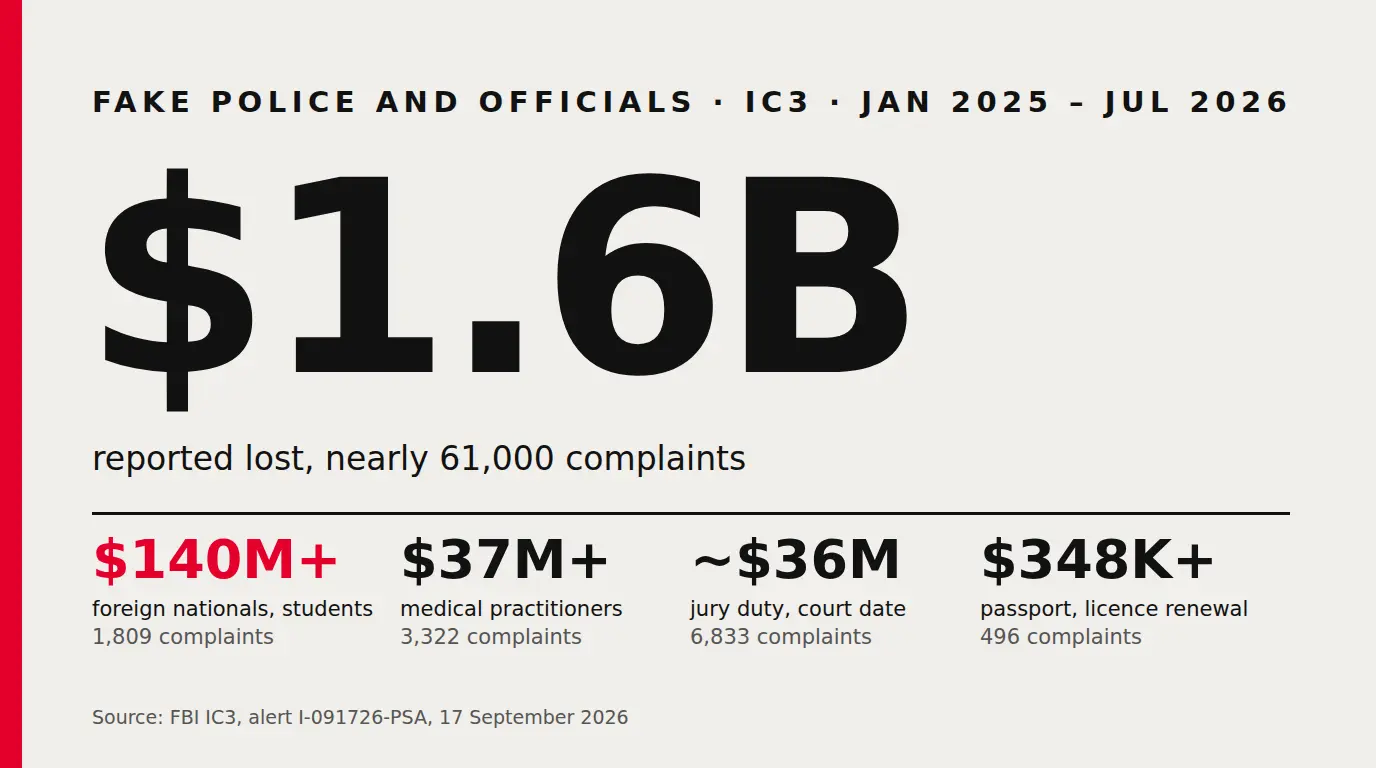
Between January 2025 and July 2026 the FBI's Internet Crime Complaint Center (IC3) received nearly 61,000 complaints about scammers posing as police or government officials. Reported losses were more than $1.6 billion. The FBI published the figures on 17 September 2026.
Most of these complaints follow one script. The caller says you are connected to a crime and threatens arrest unless you pay to clear the charges or to help catch the "real" criminals. Other versions use a missed jury duty or court date (6,833 complaints, nearly $36 million) or a passport or licence that is about to expire (496 complaints, more than $348,000). Medical practitioners were told their licence was expiring or had been used in a crime: 3,322 complaints, more than $37 million.
Foreign nationals and international students in the US were threatened with extradition or a cancelled passport by people posing as police or diplomats from their home country. Those 1,809 complaints add up to more than $140 million. In some cases the scammers wore fake police uniforms and used mock sets of government offices.
The callers spoof real phone numbers and the names of real agencies, IC3 included. They keep the victim on the line and tell them not to speak to family or the bank. Payment is demanded in prepaid cards, bank wires, cryptocurrency, couriers or cash fed into a crypto kiosk. The FBI says scammers now also use AI to appear as officials on video calls.
- The FBI says law enforcement and government authorities never phone or text people to demand payment or to ask for personal or sensitive information.
- Officials never ask to be paid in prepaid cards, cryptocurrency or through a courier.
- Hang up. Call the agency on a number you look up yourself, not one the caller gave you.
- If you have paid, call your bank first, then report to your local police and at ic3.gov. Keep the phone numbers, messages and payment details.
Source: FBI / IC3, 17 September 2026
Read the original: ic3.gov