
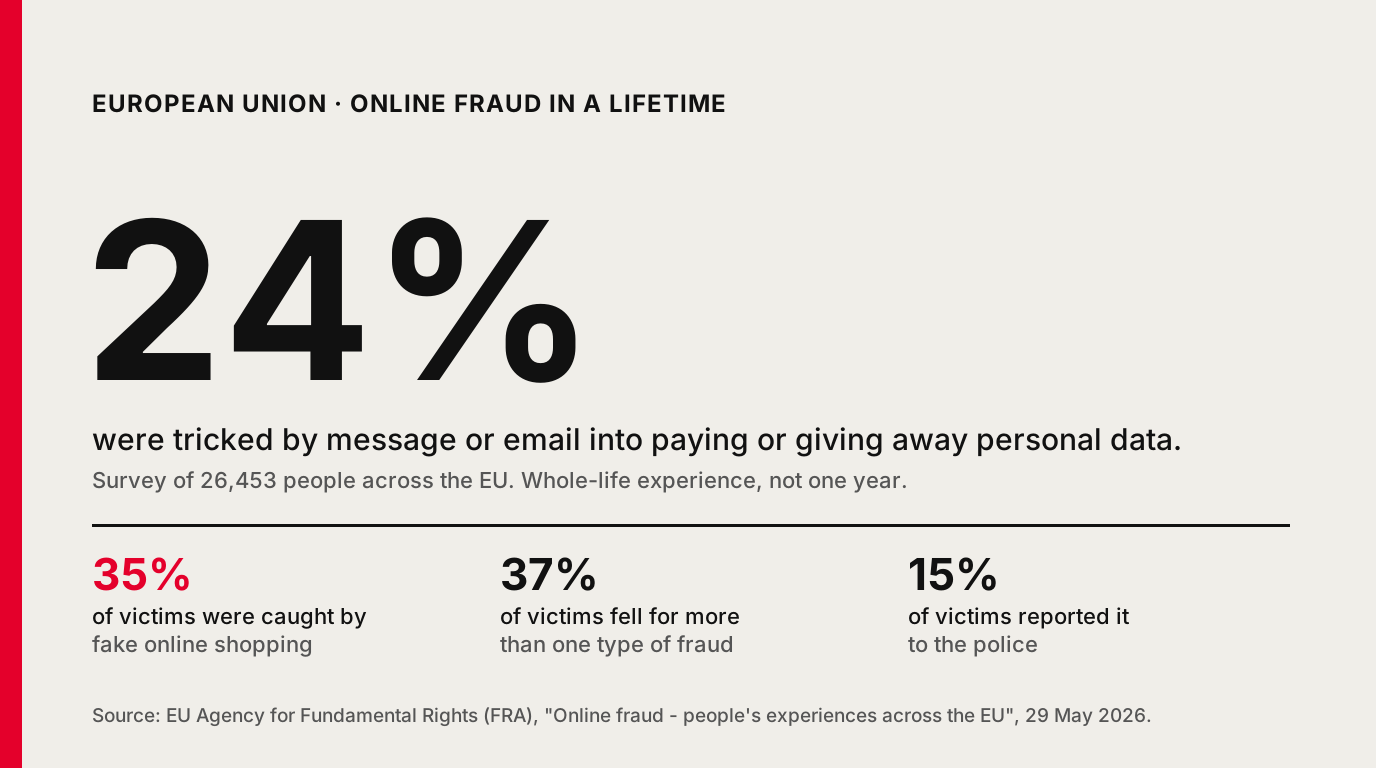
About one in four people in the European Union have fallen for online fraud at some point in their lives. In a Eurobarometer survey of 26,453 people across the EU, 24% said they had been deceived through instant messages or emails into transferring money, making payments or giving away their own personal data. The EU Agency for Fundamental Rights (FRA) published the findings on 29 May 2026.
The most common type was fake online shopping, where goods or services are paid for and never arrive: 35% of victims had been caught this way. Next came impersonation. Fraudsters had posed as a family member to 25% of victims, as a business or work contact to 24%, and as someone from their bank to 22%. Investment scams had hit 20%. Over one in three victims (37%) had fallen for more than one type.
Only 15% of victims reported it to the police. Counting banks, online platforms and phone companies as well, 44% told someone. Afterwards, 34% changed how they behave online and 28% said they had lost trust.
These are answers about people's whole lives, not a count for one year, and the report gives no amounts lost.
- With the holiday sales coming, buy from shops you already know, and be wary of a site you found through an ad with prices far below everyone else's.
- A message from "family" or "the bank" asking for money or details is a reason to stop and call that person or bank on a number you already have.
- Fell for one scam? Expect more attempts. More than a third of victims in the survey were caught more than once.
- Report it, to your bank and to the police. Most victims in the EU do not.
Source: EU Agency for Fundamental Rights (FRA), report "Online fraud - people's experiences across the EU", 29 May 2026
Read the original: fra.europa.eu