
The Australian Federal Police (AFP) issued an urgent warning on 1 October 2026 about business email compromise. In this scam a criminal poses as a trusted business, supplier or colleague and gets a payment sent to their own account. Australia's National Anti-Scam Centre counted $166.8 million in reported losses to these payment redirection scams last year, second only to investment scams, the AFP said.
It often starts with someone breaking into an email account and reading it for weeks or months to learn which payments are due. The request then comes from the real account or from an address that differs by a letter or two, which the AFP calls "typosquatting". Criminals may delete emails or change inbox rules to hide. They aim at property settlements, building work and supplier invoices, often just before a weekend or public holiday, and say it is urgent.
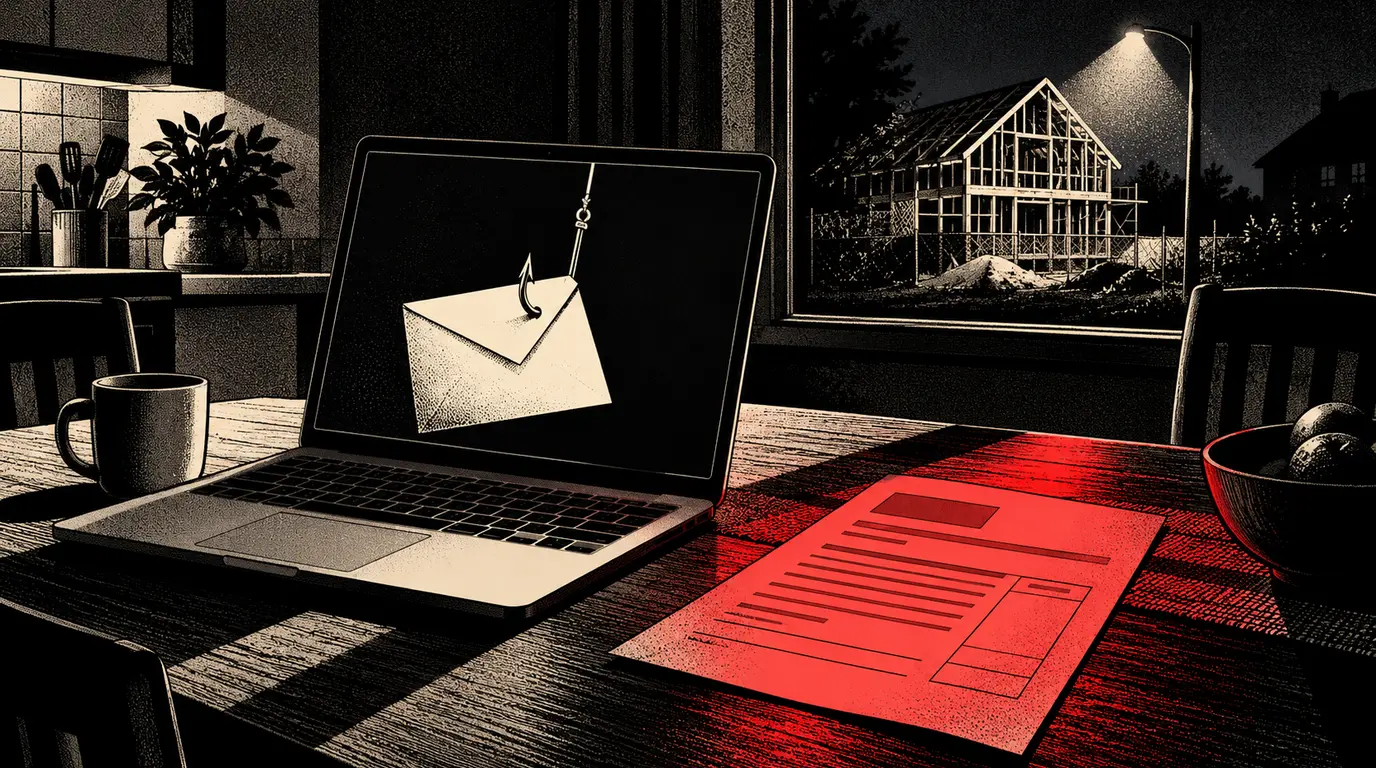
One case in the warning: a Tasmanian couple nearing retirement was paying their builder in instalments. Criminals slipped a fake invoice with new bank details into the emails and $47,500 went to them. The bank emailed to check the new details, and the criminals intercepted that email too. The bank caught the next invoice and phoned the couple. The builder stopped work when payments stopped, and the couple had to leave their rental home.
- An email says the bank details have changed. Phone the business on a number you already had, never one from that email.
- Compare the sender's address letter by letter with earlier emails.
- Be suspicious of urgency, secrecy or a push to skip normal checks.
- If you have paid, call your bank on its official number and report it to police at cyber.gov.au.
Source: Australian Federal Police, 1 October 2026
Read the original: afp.gov.au